By Hayes Hunt and Joshua Ruby
 Six months after Edward Snowden began leaking information about the National Security Agency’s secret data collection methods, two federal judges – one in Washington, D.C. and one in New York – have reached opposite conclusions about whether one NSA program unlawfully searches the phone records of millions of Americans. The two diverging decisions in Klayman v. Obama (that the program is unlawful) and in American Civil Liberties Union v. Clapper (that the program is lawful) not only create legal uncertainty for the NSA’s controversial data collection initiatives but also show how hard it is to resolve questions of privacy and the proper scope of government surveillance in the face of new technology and new collection methods. And the presence of these two thorough, well-reasoned, and diverging decisions makes it much more likely that the Supreme Court will ultimately resolve the NSA program’s legality.
In June, Snowden revealed, and the Guardian newspaper published, a classified order of the Foreign Intelligence Surveillance Court (FISC). The order authorized Verizon to turn over all “telephony metadata” – information like number dialed, date, and time – for all telephone calls with at least one party in the United States for which it had records. Although the order expired after 90 days, the Government soon admitted that the order was a small part of a much larger program, one which began in 2006 with the aim of collecting and analyzing the telephony metadata from all major wireless carriers for use in terrorism investigations.
In Klayman, several plaintiffs – including Freedom Watch founder Larry Klayman – challenged the program in federal district court in Washington. And in ACLU v. Clapper, the ACLU, its New York affiliate, and several related organizations filed a similar suit in federal court in New York. Both sets of plaintiffs argued that (1) the program exceeds the terms of section 215 of the USA PATRIOT Act, the statutory authority permitting the FISC to grant such orders, and (2) that the program constitutes an unconstitutional search in violation of the Fourth Amendment; the ACLU also asserted that the program violated its First Amendment rights. Each set of plaintiffs soon moved for a preliminary injunction shutting the program down pending the outcome of the case; in ACLU v. Clapper, the Government also moved to dismiss. 
In both proceedings, the Government countered the plaintiffs’ constitutional arguments by relying on Smith v. Maryland, 442 U.S. 735 (1979). In Smith, the Supreme Court held that the installation of a pen register – a device which records the date, time and number dialed of outgoing telephone calls – does not constitute a “search” governed by the Fourth Amendment. The Court reasoned that, because telephone service providers keep similar records of the calls they handle, a caller has no reasonable expectation of privacy in the information, and the Government’s procurement of the information is not a search in the constitutional sense.
The NSA’s program, the Government argued, was little more than a straightforward application of the Smith rule that the Fourth Amendment does not protect information like the date, time and number dialed of a telephone call. This reasoning had frequently persuaded FISC in the years since Smith, and FISC had accordingly often ordered the production of telephony metadata to the Government.
In Klayman, Judge Leon broke with FISC and rejected the Government’s argument. The minimal surveillance directed at one individual in Smith, he concluded, paled in comparison to the NSA’s extensive program, dating back to 2006 and still ongoing, dedicated to collecting and analyzing telephony metadata. But more importantly, he noted, modern society has changed radically as mobile telephones advanced technologically and went from being common to ubiquitous. These changes mean that the NSA can harvest more metadata from each mobile telephone and that that data will reveal much more about the owner of that telephone than the simple pen register at issue in Smith. He concluded that the plaintiffs had a reasonable expectation of privacy in the data the NSA collects and would likely prevail on their Fourth Amendment claim.
 Judge Leon acknowledged that his decision conflicts with many rulings of FISC, as well as with orders of several other federal district judges who have rejected legal challenges to the NSA program since its disclosure. Recognizing the unsettled legal terrain, Judge Leon granted the plaintiffs’ requested preliminary injunction shutting down the NSA program but also stayed his order while the Government pursues an appeal.
In ACLU v. Clapper, Judge William H. Pauley decided the same dispute with the opposite result, that the NSA’s collection of telephony metadata survived constitutional scrutiny. Beginning by invoking the possibility that the NSA program could have helped prevent the September 11, 2001 attacks, Judge Pauley’s opinion is a full-throated defense of the NSA’s collection methods.
On the plaintiffs Fourth Amendment claim, Judge Pauley concluded that Smith rendered the NSA program legally permissible. He pointedly disputed the plaintiffs’ premise by concluding that the call records at issue belonged not to the plaintiffs, but to Verizon and other telecommunications service providers. Because the telephony metadata the NSA collected belonged not to the plaintiffs but to the telecommunications providers, he reasoned, Smith, as well as numerous other cases addressing government acquisition of information voluntarily provided to the authorities or other third parties, meant that the plaintiffs had no reasonable expectation of privacy in the telephony metadata related to their telephone calls. Accordingly, the NSA’s collection of the telephone metadata did not constitute a “search” within the meaning of the Fourth Amendment and crosses no constitutional boundaries.
Judge Pauley also expressly disagreed with Judge Leon’s reasoning that the changed character of a modern citizen’s interactions with his or her mobile telephone alters the constitutional analysis of the NSA program. While acknowledging that mobile telephones can do more and collect vastly more data than ever before, Judge Pauley noted that the NSA program at issue here solely involves the collection of metadata related to simple, old-fashioned telephone calls. So viewed, no novel constitutional issues arise, and the program is lawful.
The decisions create substantial legal uncertainty for the NSA program. And although the plaintiffs in ACLU v. Clapper and the Government in Klayman will probably pursue an appeal, the presence of these two well-reasoned cases for opposite results makes it likely that the various federal courts of appeals which will hear these and other, similar cases will also reach different results. In that event, the Supreme Court will almost certainly have the last word on the legality of the NSA program.

Joshua N. Ruby joined Cozen O’Connor in 2013 as an associate in the firm’s Litigation Section. Joshua practices out of the firm’s Philadelphia office. Joshua graduated from Harvard Law School, magna cum laude, and the University of Chicago with a Bachelor of Arts in history with honors, and English language and literature. Joshua completed clerkships with the Honorable Chief Judge J. Curtis Joyner, U.S. District Court, Eastern District of Pennsylvania, the Honorable Peter C. Dorsey, senior judge, U.S. District Court, District of Connecticut, and Associate Justice David A. Mills, Massachusetts Appeals Court.
 In September 2009, when the FBI had arrested Sergey Aleynikov for allegedly stealing proprietary trading codes from Goldman Sachs, the financial powerhouse probably did not expect, as a purported victim, to pay him to defend against the criminal charges. However, last month a New Jersey federal judge held that Aleynikov, a programmer at a Goldman subsidiary for less than two years, could be considered an officer by virtue of his vice president title and that the company’s bylaws required it to advance his attorney fees. The ongoing dispute over the costs of Aleynikov’s defense against federal and state charges arising from his alleged theft demonstrates the importance of careful drafting of the advancement and indemnification provisions of corporate bylaws.
 The court also relied upon the liberal policy in favor of advancement articulated in the Delaware General Corporation Law, which many companies, including Goldman, use as a model for their advancement and indemnification provisions. Under the DGCL, a corporation may indemnify any person who is a party to litigation because he or she “is or was a director, officer, employee or agent of the corporation.” Any employee may be indemnified if he or she is “successful” in the proceeding and acted in good faith with a reasonable belief that his or her conduct was lawful. Advance payment of legal expenses, however, are available only to an “officer or director of the corporation.” As a condition of advancement, the officer or director must agree to repay the fees to the corporation if he or she is not ultimately entitled to indemnification—for example, if unsuccessful in the litigation. In light of the repayment requirement, the DGCL calls for liberal application of its advancement provision—a principle the court relied upon in finding in favor of Aleynikov.
 A larger issue for Goldman is the possibility that its army of vice presidents may be entitled to advancement. According to Goldman, the title “vice president” is ubiquitous in the financial industry, and is used to label employees as mid-level managers with more responsibility than entry-level associates but less than senior managers. Indeed, Goldman pointed out that there are thousands of vice presidents (as many as 37.5 percent of its nearly 35,000 employees) working at the company. Following the ruling against Goldman, it is unclear whether each of its approximately 13,000 vice presidents may now have a potential right to advancement of legal fees. Notably, Goldman’s use of the title is not unique in the financial industry, where vice presidents are common and the label is a form of recognition rather than a symbol of managerial authority. For example, Merrill Lynch was infamous in the 1990s for having six distinct levels of vice presidents, ranging from “assistant vice president” to “senior executive vice president.”
 According to a recent decision by the Third Circuit, police are required to get a warrant prior to attaching a GPS tracker to a suspect’s vehicle.
 In Katzin, the Third Circuit clarified this issue, explicitly holding that a warrant is required in order to install and use a GPS device on an automobile.
  With the clear guidance of the Third Circuit, lower courts and law enforcement know that the Fourth Amendment requires a warrant for GPS tracking of one’s car. The next time law enforcement has the time and ability to consult about the propriety of using a GPS device they now know to ask a magistrate for a search warrant.
 On July 31, as an act of protest against an order to share a trial court’s award for the wrongful death of his son with others injured in the same traffic accident, an Illinois man decided to pony up the $150,000 in quarters. The 600,000 quarters were loaded into 150 bags, and an armored truck transported the four-ton payload from St. Louis to Marion, Ill. The bags were then divided equally, loaded onto two flatbed trucks and delivered to the law firms that represented the other victims in the wreck. Of course, not all cash transactions are this burdensome, but the example helps to explain why more payments are made without using bills or coins than ever before.
 are particularly pressing because the difficulty of identifying where Internet transactions involving virtual currencies “take place” could readily lead to jurisdictional disputes.
 smartphone, and capable of being sent directly from the buyer to the seller. As with actual cash, transactions can be anonymous, and the seller knows immediately that he or she has been paid. There are no intermediaries, fees or concerns about the payment being fraudulent. However, the price of declaring itself independent from any existing currency or banking system has been the introduction of significant uncertainty and instability.
 Every day, countless civil lawsuits are filed in this country. Every day, countless plaintiffs seek relief from our nation’s court systems, whether it be to recover for economic losses, to prevent future illegal conduct or to challenge a law or regulation. For a lawsuit to continue past the preliminary stages, each plaintiff must allege some degree of facts and a cognizable legal theory that entitle that plaintiff to relief. In turn, each defendant has an opportunity to dispute the plaintiff’s factual and legal allegations and thereby contest the validity of the action. All of this is quite elementary to even the greenest of lawyers.
 for the Central District of California in February. The government’s complaint alleges that between 2004 and 2007, S&P misled investors by issuing a series of fraudulent credit ratings for collateralized debt obligations and other residential mortgage-backed securities. At the time the suit was filed, Attorney General Eric Holder said there was “no connection” between the lawsuit and S&P’s 2011 downgrade of the United States’ credit rating. Some, however, observed that the other major ratings companies, Moody’s and Fitch, which did not downgrade the government’s credit rating, were also heavily involved in rating mortgage-based securities but were not sued by the federal government.
  As the U.S. Court of Appeals for the Second Circuit has observed in Sussman v. Bank of Israel, 56 F.3d 450, 459 (2d Cir. 1995), citing the Ninth Circuit’s ruling in Townsend v. Holman Consulting, 929 F.2d 1358 (1990), there is good reason for that limited inquiry: “The complaint is, of course, the document which embodies the plaintiff’s cause of action and it is the vehicle through which he enforces his substantive legal rights. Enforcement of those rights benefits not only individual plaintiffs but may benefit the public, since the bringing of meritorious lawsuits by private individuals is one way that public policies are advanced. It would be counterproductive to use Rule 11 to penalize the assertion of nonfrivolous substantive claims, even when the motives for asserting those claims are not entirely pure.” Thus, in the S&P case, when U.S. District Judge David Carter of the Central District of California held in July that the United States had sufficiently pleaded its causes of action against S&P, that ruling effectively eliminated S&P’s grounds for a Rule 11 motion.
 According to the Fifth Circuit, the government does not need a warrant to access cellular providers’ records of caller location data. In re: Application of the United States of America for Historical Cell Site Data, No. 11-20884 (5th Cir. July 30, 2013).
 location data must be conveyed to providers, and thus that providers record that data, and (2) the use of phones is entirely voluntary. Id. at 21. “New technology may provide increased convenience or security at the expense of privacy, and many people may find the tradeoff worthwhile.” Id. at 23 (quoting United States v. Jones, 132 S. Ct. 945, 962 (2012) (Alito, J., concurring). The Court concluded that the legislature is best positioned to strike a balance between privacy and safety, and that in this case, Congress did so in enacting the SCA. Id. at 23.
 Chances are, when you hear or read about a defendant entering a plea in a criminal case, you picture a guy in an orange jumpsuit, someone who ultimately is most likely led away in handcuffs after the plea is entered. But what happens when the criminal defendant isn’t a person but a corporation? How exactly does a corporation plead guilty — or not guilty, for that matter?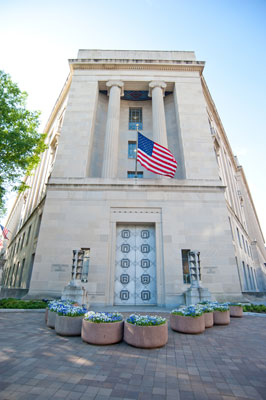
 Unlike with a natural person, however, the plea process for a corporate defendant may be done entirely through its legal counsel, so long as he or she has the proper authority. Rule 43(b)(1) of the Federal Rules of Criminal Procedure explains a corporate defendant need not be present at a plea so long as it is represented by counsel who is present. GSK entered its guilty plea through its counsel. A year later, SAC Capital entered its not guilty plea through its attorneys. The benefits to this approach are clear: It is likely to ensure a smooth and well-informed plea process.
 Edward Snowden’s detention in the Moscow airport transit zone, and the U.S. government’s efforts to extradite him, may seem confined to that case’s politically charged circumstances. But what if Snowden were merely a malingering corporate employee? Imagine if he had absconded with company secrets (such as the Coca-Cola recipe), or embezzled company funds, and was hiding out halfway across the world. Under what circumstances, if any, could he be forcibly returned to the United States to answer for his actions? Fans of the 2008 film The Dark Knight will recall the “extradition” of the accountant Lau from Hong Kong. Batman flew to China, grabbed Lau from the skyscraper penthouse and reverse-parachuted into an airplane to return to Gotham City. The financial costs, technology and political consequences involved in such an undertaking relegate that manner of extradition to the creative minds in Hollywood.
 government’s burden in assessing a case. As discussed above, the costs of investigating and preparing a case for extradition are often prohibitive, and that is before accounting for the political capital necessary to secure compliance with an extradition treaty.
 The fugitive NSA leaker Edward Snowden’s widely publicized detention in the transit zone of Moscow’s Sheremetyevo International Airport may well bring to mind Tom Hanks’ 2004 film The Terminal, about a man who finds himself trapped at New York’s John F. Kennedy Airport after his passport is rendered invalid by the start of a revolution in Krakozhia, his fictionalized home country. What are these airport transit zones, and, more importantly, are they legally important to us?
 The reach of these zones quickly expanded.
  However, to maintain this position, Russia has had to ignore its own regulation. Russia’s
  Lawyers and law firms are increasingly using blogs, also referred to as “blawgs” along with social media sites such as Facebook and Twitter, to build their visibility and brand. While blogs do not have the traditional look and feel of attorney advertising, they certainly have at least some measure of commercial purpose. After all, it is unlikely that law firms would expend resources on this new form of communication if they did not at least hope to receive some return on their investment. Yet, blogs may not fit neatly inside regulations on attorney advertising that were written with more traditional media formats in mind. A recent Virginia Supreme Court case helped shed some light on when and how state bar organizations can regulate the content of attorney blogs. The case is available at
  The case eventually made its way to the Virginia Supreme Court. First, the Court determined that Hunter’s blog was commercial speech, specifically attorney advertising. The Court noted that the blog was linked to the law firm’s website and had the same style and look as the firm’s website. It also noted that Hunter specifically mentioned his lawyering experience and skills in nearly all of the posts and that the blog did not allow readers to post commentary and engage in discussions. The Court acknowledged that some of the posts contained political commentary, but stated that this limited content did no more to “transform Hunter’s otherwise self-promotional blog posts into political speech than opening a presentation with a prayer or a Pledge of Allegiance would convert them into religious or political speech.”
 In making its decision, the Court emphasized that simply because a speech is an advertisement, references a specific product, or is economically motivated does not necessarily mean that it is commercial speech. However, the combination of all of those factors is strong evidence that the speech is commercial. The Court appeared to suggest that blogs that predominately contain posts on general legal topics and allow for discussion and commentary would properly be characterized as non-commercial speech even if they derivatively bring attention to a law firm or a particular attorney’s legal practice. This may be true even if the blog is linked from a law firm’s website. In any event, attorneys who blog should be cognizant of the line between general commentary and self-promotion. Once a blog crosses that line, it becomes attorney advertising and is subject to regulation by the state.