By Hayes Hunt
and Jeffrey M. Monhait
 The focus on the political consequences of the Internal Revenue Service scandal has overshadowed a troubling reality that a federal agency targeted specific groups of people for discriminatory treatment. In singling out conservative groups, the IRS reminded us that the McCarthy-era Red Scare is not the distant memory many would like to believe. However, the media’s uniform condemnation of this conduct demonstrates how the world has changed since then. People do not quietly allow government abuses to occur. This political backlash may be responsible in part for the U.S. Department of Justice’s criminal investigation into the IRS’s actions. Civil lawsuits are being filed by affected groups. The critical question is what legal remedies are available to organizations singled out by the government for discriminatory treatment.
IRS REVIEWS APPLICATIONS FOR TAX-EXEMPT STATUS
Organizations seeking exemption from federal taxes must apply to the IRS for that classification. The IRS, in particular the Office of Rulings and Agreements, of the Exempt Organizations function, evaluates these applications. The majority of applications (70 percent in 2012) are approved without additional requests for information from the applicant. If the IRS needs substantially more information, the application is assigned to the Determinations Unit. A specialist in that unit sends the applicant a request for information, and after the information is received, the specialist issues a final determination letter approving or denying the tax-exemption application.
There are different types of tax-exempt groups. Charitable organizations may not participate in election activities. Social welfare organizations, agricultural and labor organizations and business leagues may engage in some campaign activities. Charitable organizations may only participate in “limited” lobbying, but the other groups may lobby in furtherance of their tax-exempt purposes.
IRS TARGETED CONSERVATIVE GROUPS
Last year, members of Congress and the media raised concerns that the IRS was targeting conservative groups’ applications for increased scrutiny. Responding to these concerns, the U.S. Department of the Treasury inspector general for tax administration initiated an audit to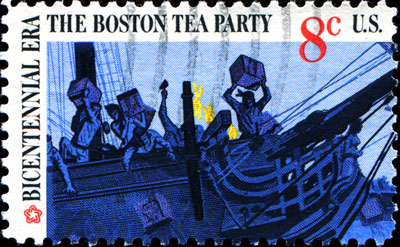 investigate the IRS’s conduct in reviewing applications.
The report of that review, published May 14, revealed that the Determinations Unit selected for enhanced scrutiny applications submitted by any organization with the words “Tea Party,” “Patriots” or “9/12” in their names. Rather than using criteria developed based upon the tax laws and regulations, the IRS agents targeted specific political viewpoints for disparate treatment.
These practices reach back to 2010. The targeted groups were subjected to lengthy delays in the processing of their applications and often had to reply to burdensome information requests (including, in some cases, submitting donor lists). Some applications were pending for more than three years. The audit reviewed 296 “potential political cases,” and although 108 had been approved and none denied, 160 cases remained open, pending for between 206 and 1,138 days.
WHAT RELIEF IS AVAILABLE?
How should individuals and entities respond when the government targets specific groups? The IRS scandal forces consideration of these issues. On one hand, the government can and should conduct targeted actions in some instances. When trying to crack down on political corruption or drug trafficking, the government is serving a public good by attacking unlawful conduct.
However, the IRS scandal is particularly unsettling because it gives rise to the allegation that the government was targeting ideas. Although the law limits the political activities of tax-exempt groups, the practice of processing these applications in a politically partisan manner raises troubling concerns. Whether it is unlawful or merely part of the political landscape, it is disconcerting.
FILE A CIVIL ACTION
Congress has provided by statute (commonly known as Section 1983) a right of recovery for the violation of a civil right perpetrated by the government. “Section 1983 is the conventional vehicle through which relief is sought for claims of political discrimination by state actors,” as the court held in Rodriguez-Reyes v. Molina-Rodriguez, 711 F.3d 49, 54 (1st Cir. 2013). There are two elements to Section 1983 claims: (1) “the conduct complained of has been committed under color of state law,” and (2) “this conduct worked a denial of rights secured under by the Constitution or laws of the United States.”
 In this case, one could plausibly claim First Amendment violation, because the IRS arguably infringed upon the free speech rights of these conservative organizations. The IRS, in singling out these groups, made it more difficult for them to secure donations to fund their activities. These organizations also lost time and resources participating in the drawn-out application process. The overall effect chilled the political speech of these groups.
SEEK A DECLARATORY JUDGMENT
Lastly, the targeted groups could have filed a declaratory judgment action seeking a final decision on their exemption applications. Parties have this right in the case of “a failure by the [IRS] to make a determination” on an application for tax-exempt status. Possible forums for such a claim include the U.S. Tax Court, the U.S. Court of Federal Claims and the U.S. District Court for the District of Columbia. Although a group has to exhaust its administrative remedies before seeking such relief, this requirement is met once an application has been pending for 270 days and the organization has complied with all requests for information. According to the inspector general’s report, none of the affected organizations sought to assert this right. Regardless, the legal fees associated with seeking declaratory judgment against the IRS would likely be prohibitive for most political groups seeking nonprofit status.
Originally published in The Legal Intelligencer on May 29, 2013
 Recently, a federal judge rejected Aaron Swartz’s estate’s request to release the names of the individuals involved in Swartz’s criminal prosecution.
 In deciding the issue, the Court turned to
  Most in-house lawyers, if they’re fortunate, haven’t bumped up against the Fifth Amendment and its related issues since the bar exam. After all, the so-called “nickel” typically arises solely in the criminal context, and corporations don’t have the right to plead the Fifth Amendment at an organizational level. However, with governmental investigations of varying types on the rise, and in-house counsel advising the corporation and preparing witnesses for participation in these investigations, the Fifth Amendment and its protections are an important tool in protecting the company and its employees from self-incrimination.
 Often, whether a document belongs to a corporation or an individual is a threshold question in asserting the privilege. If a document is a corporate record, the act of production is merely custodial in nature and no privilege applies. If, however, the document is personal to an employee of the corporation, the privilege would shield production if the document were self-incriminating. Typically, courts look at the totality of the circumstances to determine whether a document is corporate or personal, including factors such as who prepared the document, where the document was located, the contents of the document and whether the creation of the document was necessary to the business. In today’s world, however, where the line between employee and employer property blurs more every day, and more employees are bringing their own technology to the workplace, these questions can become difficult to answer.
 corporation, both the individual and the corporation can be criminally liable. When such a scenario occurs involving a corporate officer, the officer’s assertion of the Fifth Amendment privilege can protect the individual directly and the corporation indirectly. Therefore, in-house counsel should prepare the officer for Fifth Amendment issues or provide the officer with separate counsel who can assure that the officer is properly prepared. So long as the officer is protected by the attorney-client privilege of the corporation, the discussions between in-house counsel and the officer regarding the Fifth Amendment are protected from disclosure by the privilege. Although the interest of the individual against self-incrimination and the interests of the company against being incriminated by an officer will often align, in-house counsel should carefully examine the facts and interests involved to determine whether separate counsel is necessary or desirable under such circumstances.
 The answers to these questions depend, as always, on the specifics of the situation and the facts involved. However, corporate counsel can best be prepared for dealing with these kinds of questions by familiarizing himself or herself with the protections of the Fifth Amendment, the limits of those protections, and its applicability to a wide variety of circumstances and proceedings. By giving serious consideration to the uses and consequences of the Fifth Amendment from an early point in the proceedings, corporate counsel can maximize the use of this powerful tool to the benefit of the client and the protection of its employees, and to avoid the conflicts and pitfalls often created when the interests of the corporation and the employee diverge.
 By David Walton
 It is not uncommon for the parties to play hardball litigation to exert pressure on the other side to settle a case. But if your opposing party engages in tactics that you perceive to be coercive, should you immediately seek relief from the court? A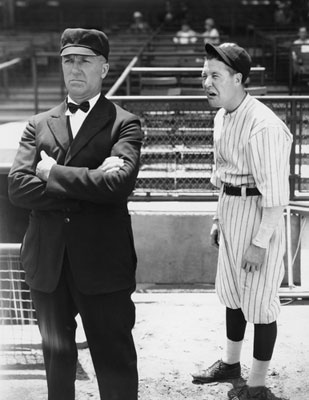
 Last week,
  despite the fact that this is not his first offense. This incident, of course, brings up memories of the 1997 Tyson v. Holyfield fight, where Tyson bit off a portion of Holyfield’s ear. Rather than face criminal penalties, Tyson was fined $3 million and his boxing license was temporarily revoked.
  Let’s say one day you observe your local police officer walk a drug-sniffing police dog up to the front door of your neighbor’s house. The dog sniffs around outside, then gives a positive signal to the officer.
 Writing for a 5-4 majority, Justice Scalia wrote that the police’s actions with the drug-sniffing dog constituted a physical intrusion into the curtilage of Jardines’ home which was protected by the Fourth Amendment. The majority opinion rejected the notion that the police had an implied license to come onto Jardines’ property with their dog. While past decisions of the Court had recognized an implied license for a visitor, whether a police or private citizen, to approach a home and knock on a door “background social norms do not invite him there to conduct a search[,]” wrote Justice Scalia.
 Justice Alito, writing for a four-justice minority, argued that the police were acting within their license when they approached the front door, and the presence of a police dog did nothing to alter that license. Privacy interests were not violated, according to the dissenting opinion, because a reasonable person understands that odors emanating from a home are capable of being detected from locations that are open to the public.
 Recently, the
  In state courts, the rules governing recusal differ but generally are more vague than § 455. Cannon 3 of the Pennsylvania Code of Judicial Conduct permits judges to recuse themselves in proceedings “in which their impartiality might reasonably be questioned.” The Cannon goes on to provide examples of instances where recusal would be proper, most of which mirror the circumstances provided in the federal court statute described above. However, unlike the federal statute that requires recusal, the Pennsylvania rule merely allows for recusal. As a result, despite the provided examples, the Pennsylvania rule is subject to interpretation and provides a judge with significant latitude when deciding whether he or she should recuse herself. In Pennsylvania state judges are elected officials. As a result, attorneys may have campaigned for a judge, donated to a judge’s campaign, or have an established relationship with a judge which arguably could warrant recusal. Also, in smaller communities, judges are central public figures and frequently interact with the public.
  Last month, the U.S. Court of Appeals for the D.C. Circuit in United States v. Ring, No. 11-3100 (D.C. Cir. Jan. 25, 2013), upheld a conviction for bribery under the public sector honest-services fraud statute, expanding the definitions of “corrupt payments” and “official action,” and thus making it easier for federal prosecutors to secure convictions under this statute. The court, in an opinion by Judge David Tatel, held: (1) implicit quid pro quo is sufficient for a bribery conviction, and no actual agreement by the public official is necessary; (2) there is “official action” when a lawyer in the Justice Department emails a secretary with the Immigration and Naturalization Service requesting expedited review of a visa application; and (3) the trial court did not abuse its discretion under the First Amendment or Federal Rule of Evidence 403 in allowing the jury to draw an adverse inference from a defendant’s history of lawful campaign contributions.
 Email Constitutes ‘Official Action’
 contributions in order to create a complete picture of Ring’s “interactions with public officials.” For example, the opinion said, there was meaty evidence of a running joke whereby Ring would hold up a campaign check and ask, “Hello quid. Where’s the pro quo?” The trial court admitted this and similar evidence to demonstrate Ring’s modus operandi and to give the jury a more complete picture of the circumstances, but each time admonished the jury that the campaign contributions were lawful and not to be considered in reaching a verdict. In all likelihood, the jurors did not appreciate Ring’s attempt at humor.
 Power for Prosecutors
 The alert of a drug-sniffing dog might allow police to search your car or baggage, but just how reliable does that hound have to be? The U.S. Supreme Court provided some guidance but rejected a fixed checklist of requirements in Florida v. Harris, the first of two significant dog-sniffing cases that were argued before the high Court last October.
 nothing in the truck.
 court had “flouted” the Court’s probable cause jurisprudence. The proper test, said the Court, is “whether all the facts surrounding a dog’s alert, viewed through the lens of common sense, would make a reasonably prudent person think that a search would reveal contraband or evidence of a crime.”